
SBI Life Calendar 2025: Photographing India’s Paralympic Champions in One Relentless Day
Every Indian photographer who grew up in the 2000s remembers how the Kingfisher calendars changed the way we looked at photography. Seeing Atul Kasbekar turn a calendar into a national event quietly planted a dream inside me: one day, I would shoot a calendar of my own for a major Indian brand.
For fifteen years my life has been mostly cricket: IPL seasons, BCCI assignments, player portraits for television graphics, and match‑day documentation. It is high‑pressure work, but it usually lives in the world of “support visuals” – images that sit behind scorecards, promos and broadcast graphics.
The SBI Life 2025 calendar was different. It was a true campaign brief from a national brand, built around six Paralympic champions who had just returned from Paris with gold, silver and bronze medals for India. For me, it was the closest thing to that Kingfisher‑level dream: a prestigious calendar, a leading Indian insurer and a fully concept‑driven shoot where photographs themselves would be the hero.

The project came through a single‑owner agency run by my long‑time friend and collaborator, Banibrata Goswami. His agency had won the mandate to produce the SBI Life 2025 calendar and he called me asking for a portfolio that could convince the brand.
I was excited and nervous at the same time. I had years of portraits of cricketers – Virat Kohli, Rohit Sharma, Jasprit Bumrah, Joe Root and others – shot for broadcasters and cricket boards, but I had never shot an official calendar for a big insurance brand. Those portraits were also relatively “simple” in terms of lighting and concept, designed to be flexible for TV graphics, not for hero prints.
Still, those pictures did one important thing: they proved that I could work calmly with high‑profile athletes under time pressure. That was what the brand was really testing when they saw my work. After a tense wait, the call came: “You’re on. Let’s start pre‑production.”
Like most big campaigns, this one came with a familiar reality: the expectations were huge and the budget was tight. Brands will happily spend on media and distribution, but when they work with smaller agencies and new photographers, they often keep production costs under heavy control.
We had to create twelve strong calendar images from six athletes. Each athlete needed at least two images: one action‑driven sports shot and one more conceptual, styled portrait. On top of that, we had to respect each athlete’s physical limitations, schedules and recovery windows.
Even though SBI Life’s corporate head office is in Mumbai and they usually shoot there, all six athletes were training at the Sports Authority of India (SAI) centre in Delhi. To avoid tiring them with travel, the decision was made to move the entire production to New Delhi and to find a large, ground‑floor studio that could easily accommodate wheelchairs and support staff. The production team, stylist, makeup and assistants were all pulled from Delhi and surrounding areas to create a tight, efficient unit.
This calendar’s full image set now lives in my archive as the SBI Life 2025 Paralympic Champions gallery – the 12 pages we built from that one intense day in Delhi.
Here is something I must confess: I have spent years inside cricket stadiums, but before this project I knew very little about the technical details of other sports like javelin, club throw, high jump, sprinting or para‑archery.
With Paralympic athletes, that lack of knowledge is not acceptable. Their technique, their equipment, the way their bodies move – everything is very specific, and disrespecting that on camera would be unfair to their life’s work.
So in the weeks before the shoot, I went back to being a student again. I watched hours of competition videos and studied reference photographs from world events. I paid attention to things like the angle of the javelin at release, the line of a high jumper’s back at take‑off, how a sprinter’s arms drive during a 200‑metre curve, and how a club thrower builds power from a seated position.
My goal was simple: when these athletes saw their pictures, they should feel “yes, this is how my sport really feels”, not just “this looks like a studio shot”.
The schedule we were given was ruthless. For each athlete we had a total slot of ninety minutes: about half an hour for wardrobe and makeup, then one hour of actual shooting time.
Within that short window we needed to produce one true action image that respected their technique and one conceptual, styled image that connected them to a larger story or emotion. There was no Plan B and no second shoot day. If we missed something in those ninety minutes, it was gone.
That forced me to design a shooting system where nothing on set could slow us down – especially not the lighting.
To survive the schedule, I arrived at the studio two hours before call time and built a dual lighting setup.
I treated the studio as if it contained two invisible sets:
Set A: sports lighting – fast, clean, high‑contrast lighting designed to freeze action. This used punchy rim lights and high‑speed flash to catch a runner mid‑stride or a javelin thrower just before release.
Set B: creative lighting – softer, more cinematic lighting designed for portraits. This setup favoured mood, shadow and texture, making space for costume, gesture and expression.
All of these lights were wired and tested before the first athlete walked in. I mapped them into different groups on my trigger, so that during the shoot, changing the look was as simple as switching on one group and switching off another. No moving stands, no shifting modifiers, no rewiring.
In practice, it meant we could go from an explosive sprint frame to a calm, regal portrait in one or two seconds, just by pressing a button. That speed was the only way to respect both the athletes’ time and the calendar’s creative ambition.
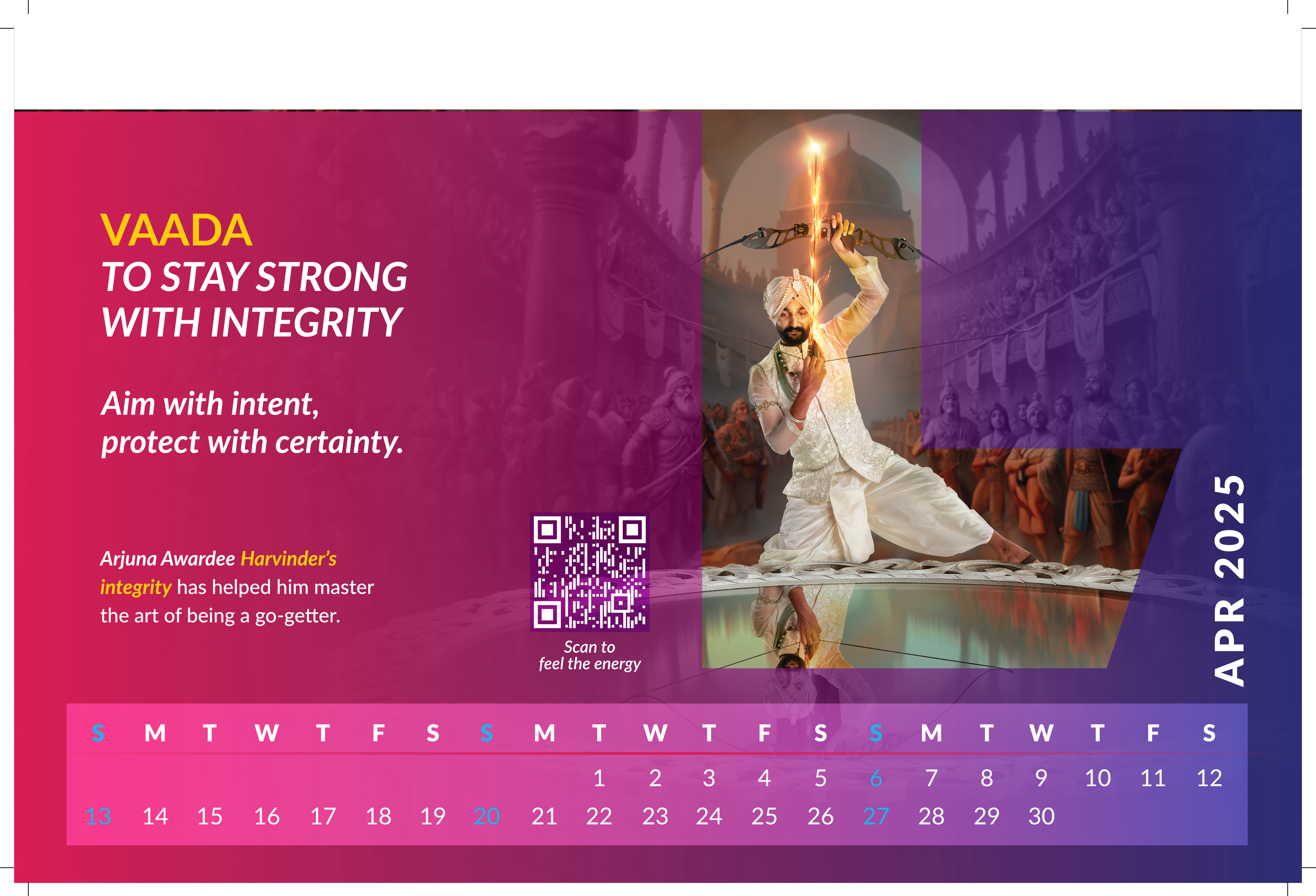
Harvinder Singh, India’s first Paralympic gold medallist in archery, brought a quiet, focused energy to the set. His real story is remarkable – growing up in a farming family, losing mobility in his legs due to a medical complication in early childhood and still building a life that balances a PhD in Economics with world‑class archery performances.
For the calendar, we planned two versions of Harvinder. In the sports look, we kept him close to his training reality. The focus was on his anchor point, the line of his bow arm and the intensity in his eyes as he drew the string. We lit him to emphasize the geometry of his posture – the triangle of his arms and the bow cutting across frame.
In the creative look, we turned to our mythology. We styled him as Arjun from the Mahabharata – the legendary archer for whom even a national award is named. The wardrobe, jewellery and posture were all built to feel royal, without turning into costume drama. The idea was simple: place a modern Paralympic champion in a visual lineage that stretches from epic stories to present‑day India.
Ajeet Singh Yadav, Paris 2024 silver medallist in the javelin F46 category, is another definition of resilience. He lost his left arm in a train accident while trying to save a friend, yet returned to sport within months and eventually threw over 65 metres on the Paralympic stage.
In the studio, we had limited space – no stadium, no full run‑up, no open sky. So we focused on the fraction of a second before release, when every muscle in his body is loaded with stored energy.
We dropped the camera low and slightly off‑axis to exaggerate the line of the javelin and the twist of his torso. Rim lights carved out his shoulders and arm, while the key light shaped his expression. The frame is less about the javelin as an object and more about that exact human decision: now I let go.
Pranav Soorma, a Paralympic medallist in club throw, competes in a classification where he generates all his power from his upper body while seated. Away from the field he works as a bank manager, balancing corporate responsibilities with elite sport – a double life that very few people see.
Our task was to show just how much force lives in his shoulders and arms. We pulled the light higher and slightly forward, creating strong shadows across his chest and hands. You can almost read the technique in the veins, the grip and the line of the club.
Shooting that frame reminded me that “action” does not always mean running or jumping; sometimes it is the focused strength of a body working within very clear limits – and still pushing past them.
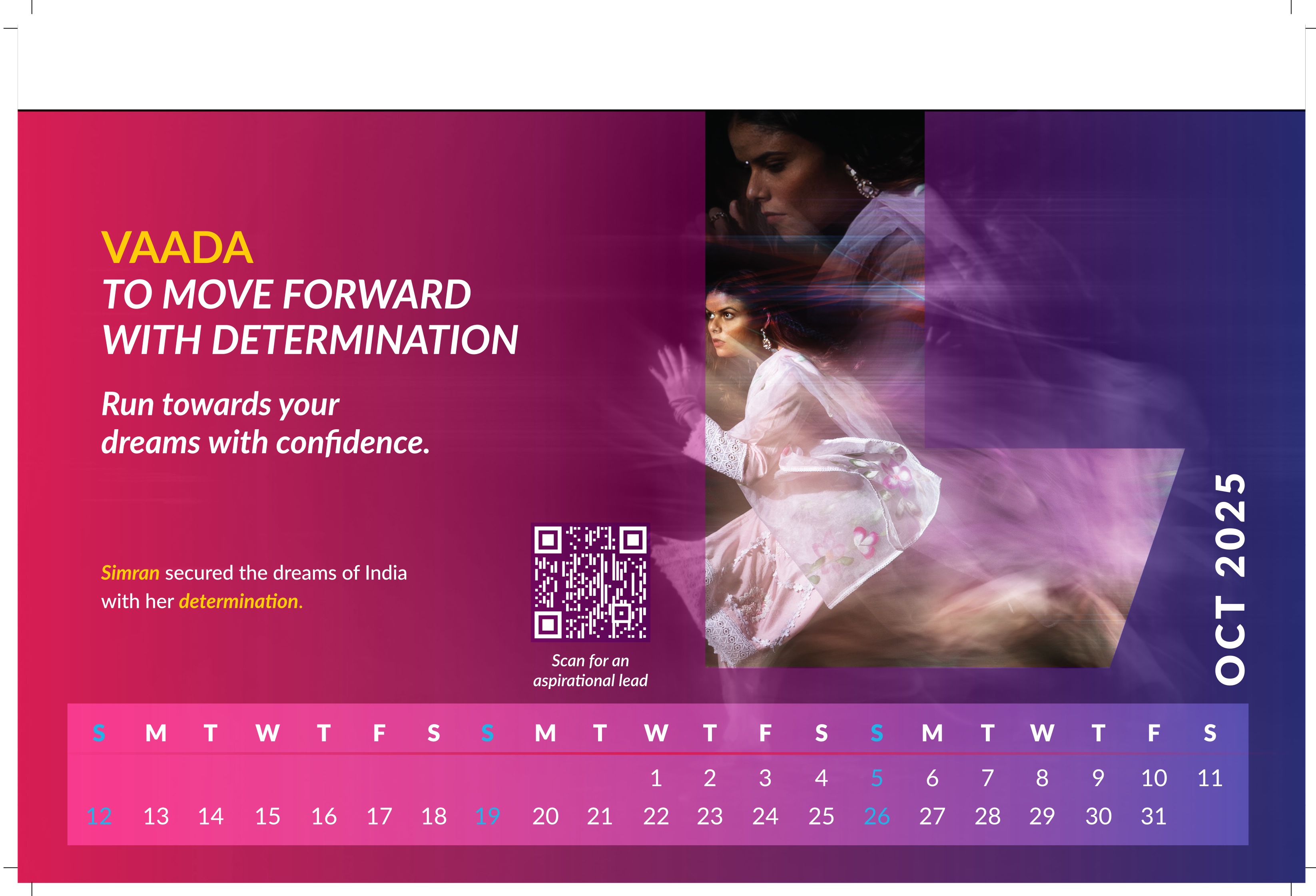
Simran Sharma, bronze medallist in the 200m T12 sprint, runs with a visual impairment she has lived with since her premature birth. Her coach, who later became her husband, helped her transform from a young girl fighting for basic vision into an international sprinter.
Simran is not built for still poses – her natural state is motion. So we laid out a track inside the studio and asked her to run as she would in competition while our high‑speed flashes froze her mid‑stride.
Then, in the middle of the schedule, I felt that something was missing. The frozen images were strong, but they didn’t fully show the feeling of her speed. I turned to Bani and asked for a risky change: a shutter‑drag experiment that was never in the approved plan.
Time was running. The client was nervous. I asked for five minutes only and promised to abandon the idea if it didn’t work within three frames.
We blacked out the studio, killed most of the lights and kept a single key plus a small “drag” light. I slowed down the shutter and tracked Simran as she ran. The flash froze her face and posture sharply, while the long exposure created a trail of motion blur behind her.
She gave us three clean runs. One frame stood out instantly – Simran in clear focus, with a ghosted ribbon of speed following her. That image was never part of the initial layout, but everybody on set knew it had to be in the calendar. The client took on the headache of pushing it through the entire approval chain, and it finally made it into the final print – all from those five borrowed minutes.
Rubina Francis, a pistol shooter from Jabalpur, has travelled a long way from childhood mobility challenges and financial stress to a Paralympic podium. Her sport is about stillness, breath control and microscopic adjustments.
For her calendar images, we softened the light and moved closer to her eyes and hands. The key frame focuses on her calm gaze down the line of the pistol, with the background falling away. It is less about the equipment and more about the concentration it takes to deliver a ten‑ring shot when an entire country is watching.
Sharad Kumar, high jump silver medallist in the T63 category, has lived with paralysis in one leg since childhood. In school he competed against able‑bodied athletes and broke records; later he balanced serious academic work with his sporting career.
High jump is all about flight. Indoors, we could not recreate a full competition bar, but we could capture the arc of his body in mid‑air. We lit him against a very dark background and worked on frames where his back bends and his chest opens, so that the viewer feels that suspended, weightless second over the bar.
Secure delivery and a brand partnership
Once the shoot wrapped, the job was not over. For a national brand, the raw files from a campaign like this are extremely sensitive. They cannot float around on open file‑sharing links or unsecured email threads.
All selects were uploaded to my own digital asset management system, the same engine that runs my archive at saikatdas.com. The agency and brand teams could log in securely, search by athlete name and download the exact files they needed for design, print and future usage – without the images ever being publicly exposed.
For me it was also a proud moment to later see these images appear on the official SBI Life LinkedIn page as part of their national campaign presence. It is one thing to shoot for a brand, and another thing to see your frames sitting at the top of their public profile.
I did not control the final retouching; that was handled on the agency side. But I did control the quality and safety of the assets leaving my studio, which is just as important on a campaign of this scale.
What this calendar means to me
Looking back, the SBI Life 2025 Paralympic Champions calendar is more than just twelve pictures printed on good paper. It is proof that the skills I built in stadiums – reading pressure, working fast with world‑class athletes, solving problems on the fly – can power a high‑stakes commercial shoot just as well.
It also shifted something in me as a photographer. Working with these six athletes changed how I think about strength, time and fairness. They are not “para” versions of anything; they are champions standing fully on their own, carrying medals that belong to all of us.
If you would like to go deeper into the visuals, you can browse the complete sequence of images from this shoot in my SBI Life 2025 calendar archive, and see how each of these frames finally lives on the page.
Work with me on your next campaign
If you’re planning a sports, commercial or calendar‑style campaign and want a photographer who can handle high‑pressure shoots, real athletes and tight timelines, I’d love to talk.
You can share your brief or ask about availability through my Collaborate page.